Atlassian Overhauls Global Observability Infrastructure by Migrating to OpenTelemetry

For nearly a decade, Atlassian’s massive observability infrastructure relied on a custom-maintained implementation of StatsD known as gostatsd. This legacy system served as the backbone for monitoring approximately 100,000 hosts across 14 global regions, maintaining a 99.95% service-level objective (SLO) while processing billions of data points. However, as the industry shifted toward standardized telemetry, the engineering team at Atlassian—led by Iris Grace Endozo, Farzad Vazirnia, and Albert Kerr—recognized that their homegrown pipeline was nearing a technical ceiling. By September 2026, the company completed a strategic migration to OpenTelemetry (OTel), a transition that represents one of the most significant architectural shifts in the company’s recent history.
The Technical Impetus for Change
The decision to migrate was driven by the increasing fragmentation of the company’s telemetry data. While gostatsd performed admirably for years, it was architecturally limited to UDP-based metrics. As modern observability demands evolved to include distributed tracing and structured logging, the gostatsd pipeline lacked native support for these protocols. Every new feature or protocol support required manual, bespoke development, effectively forcing the Atlassian infrastructure team to compete against the rapid pace of open-source innovation.
"We will lose that race. It’s only a question of when," noted the engineering team in their technical retrospective. The reliance on UDP-only ingestion meant that as more services adopted OpenTelemetry standards, the infrastructure was forced to reconcile these disparate data streams, creating technical debt that threatened the stability of their monitoring stack.
A Chronology of the Transformation
The transition was not a sudden "rip-and-replace" maneuver, which would have risked catastrophic data loss or outages for critical alerting systems. Instead, Atlassian adopted a multi-stage, phased migration that prioritized backward compatibility.
In the early stages of the project, the team focused on decoupling the interface from the engine. By maintaining a StatsD-compatible interface, they allowed individual product teams to continue sending metrics without requiring a full re-instrumentation of their services. This moved the burden of the migration from an organization-wide effort to a localized platform-team project.
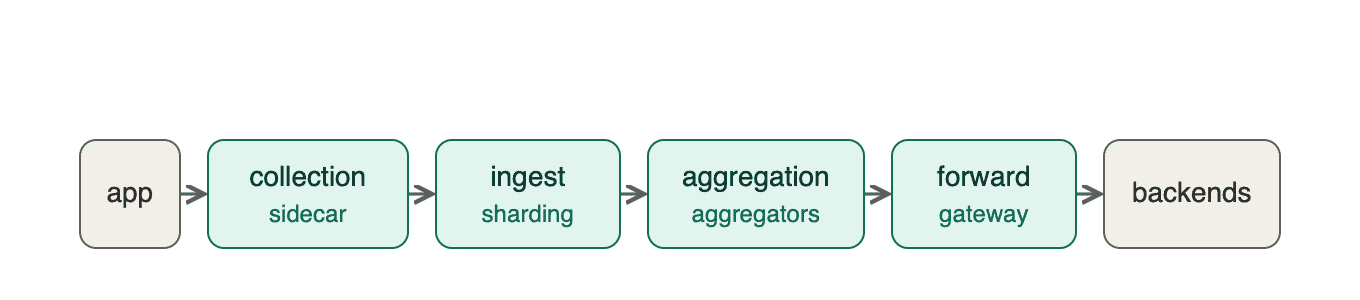
By mid-2025, the team began deploying purpose-built OpenTelemetry Collector distributions across four distinct stages: collection, ingestion, aggregation, and forwarding. This modularity allowed engineers to iterate on individual components of the pipeline without disrupting the entire flow. The final phase, involving the integration of OpenTelemetry Lambda extensions, allowed the serverless environment to adopt the same telemetry standards, effectively finalizing the transition to an end-to-end OTel-based architecture by late 2026.
Supporting Data and Efficiency Gains
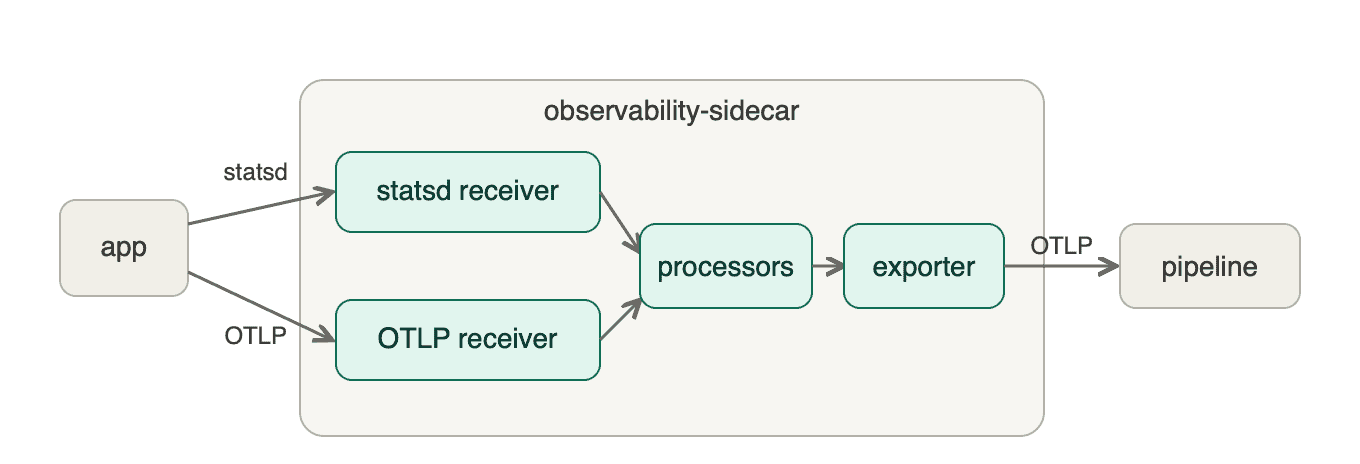
The migration yielded immediate and quantifiable operational benefits. By consolidating the observability stack, Atlassian eliminated the need to run redundant sidecars on host machines. Previously, services required both a StatsD sidecar and a separate tracing sidecar. Folding these into a single, unified OTel Collector resulted in an average 3.9% reduction in CPU usage per service across the company’s high-traffic "Micros" platform. At fleet scale, this equates to a roughly 30% reduction in sidecar resource consumption.
The ingestion layer saw perhaps the most significant performance improvement. Previously, Atlassian utilized an internal proxy named "nomad" that hashed metrics by service and environment. This approach frequently created "hot shards" when a single large service generated a disproportionate amount of data, leading to uneven CPU utilization across the cluster. By transitioning to the OTel loadbalancingexporter, which hashes metrics by streamID (the individual time series identity), the load is now distributed evenly across the fleet. This has allowed for a tighter auto-scaling band and significant cost savings during off-peak hours.
Currently, the pipeline ingests approximately 4.8 billion data points per minute, filtering and aggregating them down to roughly 220 million points before storage—a 96% reduction in volume. With the new OTel-based aggregation tier, the team reported a 50% reduction in CPU requirements compared to the legacy gostatsd aggregators.
Official Responses and Internal Perspectives
The engineering leadership at Atlassian emphasized that this project was as much about organizational agility as it was about technical performance. By standardizing on OpenTelemetry, the team has moved from a model of maintaining bespoke services to a model of configuring open-source components. "Adding to the pipeline means writing a component, not standing up a service anymore," the team stated.
This move also aligns with the broader industry trend of embracing CNCF (Cloud Native Computing Foundation) projects to mitigate vendor lock-in. By adopting OpenTelemetry, Atlassian has positioned itself to leverage the community’s collective tuning and innovation, ensuring that their observability stack remains compatible with future advancements in the cloud-native ecosystem.
Broader Impact and Industry Implications
The implications of this migration extend beyond Atlassian’s internal cost-cutting measures. The company’s decision to open-source its custom delta aggregation processor under atlassian-labs indicates a shift toward a more collaborative relationship with the open-source community. This contribution allows other large-scale organizations facing similar telemetry challenges to benefit from Atlassian’s research into delta temporality—a common pain point for organizations attempting to move away from legacy StatsD implementations.
Furthermore, the "shift-left" strategy, which aims to move instrumentation off vendor-specific SDKs and onto the OpenTelemetry SDK, marks a significant trend in enterprise software. By abstracting the instrumentation layer from the backend storage layer, companies gain the flexibility to swap observability vendors or backends without requiring extensive refactoring of their application code.
Future Outlook: The Path Forward
The completion of this pipeline migration is merely the first step in a broader observability evolution. Atlassian’s roadmap now focuses on the next layer of the stack: moving the instrumentation itself. By migrating services away from legacy libraries like DogStatsD and internal clients, the company aims to achieve a "pure" OTel environment from the application code all the way to the storage backend.
As the industry continues to scale, the case of Atlassian serves as a benchmark for how established enterprises can modernize critical infrastructure without sacrificing the reliability of their production systems. By prioritizing architectural modularity and maintaining consistent interfaces during the transition, Atlassian has successfully replaced a legacy core with a modern, community-standardized engine, securing its observability capabilities for the next decade of growth. The transition is not merely a technical upgrade; it is a fundamental shift in how the company manages the lifecycle of its telemetry data, signaling a move toward a more sustainable, performant, and collaborative future in cloud-native observability.
Related posts: